Cart
Your shopping cart is empty!
It's never too late to fix it :)

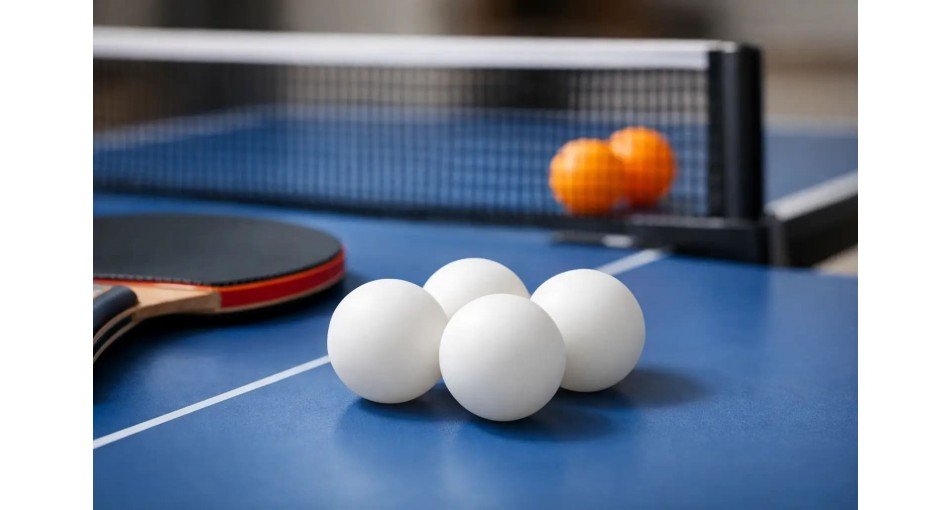
That first warm-up counterhit tells you almost everything. Some balls come off the racket clean, hold a predictable arc, and land with the same bounce over and over. Others feel slightly dull, skid a touch shorter than expected, or go out of round faster than they should. If you are looking for the best table tennis balls for competition, those small differences matter more than most players think.
At match level, the ball is not just a consumable. It affects timing, confidence over the table, touch in the short game, and how reliably you can commit on the first attack. For club players, league teams, coaches, and tournament organizers, choosing the right 3-star ball is about consistency first, then feel, then value over repeated use.
The starting point is simple - use 40+ 3-star balls from established brands. But not every 3-star ball feels the same in play, and not every premium label delivers the same quality batch to batch.
The best competition balls tend to stand out in four areas. Roundness is the big one, because even a slight variation changes trajectory and bounce. Hardness matters too. A harder ball often feels crisp and direct, while a slightly softer one can give a more muted contact and a fraction more dwell sensation. Then there is seam quality and durability, which show up after several sessions rather than in the first few rallies. Finally, there is overall consistency across the box. Serious players notice quickly when one sleeve contains two excellent balls and one that plays noticeably different.
For sanctioned competition, approval matters as well. ITTF-approved balls are the standard choice for official events and serious league play because they meet the governing requirements players expect. If you are buying for matches rather than casual training, that should be the baseline, not a bonus.
Players often talk about blades and rubbers in obsessive detail, then treat balls as interchangeable. They are not. Each major brand has its own feel profile, and that can influence what works best for your level and playing style.
Nittaku Premium 40+ has built a strong reputation for its clean bounce, excellent roundness, and refined overall feel. It is often the benchmark ball when players want top-end match quality. The downside is price. If you are supplying a club or running regular league fixtures, it may be more ball than your budget wants.
DHS 3 Star D40+ is a very popular competition choice because it combines strong durability with a reliable bounce and a firmer, direct response. A lot of players like how solid it feels in active topspin exchanges and countering situations. If your game is built around pressure, early timing, and confidence in rallies, DHS is often a very safe pick.
Butterfly R40+ is another serious option in the premium bracket. It generally offers a stable bounce and polished match feel that suits advanced club and tournament environments. Players already using Butterfly competition equipment often gravitate toward it because the overall package feels purpose-built for formal play.
JOOLA Prime, DONIC P40+, TIBHAR 40+ SL, VICTAS VP40+, and similar premium 3-star options also sit in the conversation. At this level, the differences are not usually dramatic. They come down to feel preference, quality control confidence, and what your local league or event tends to use.
If you want the highest-quality match experience and cost is secondary, Nittaku Premium 40+ is still one of the strongest answers. It is especially appealing for advanced players, coaches running elite sessions, and clubs that want a flagship match ball.
If you want the best balance of performance and practical value, DHS 3 Star D40+ is hard to ignore. It has become a go-to for many serious players because it performs like a proper competition ball and usually holds up well under regular use.
If you are buying for club match play and want a trusted premium brand with broad recognition, Butterfly R40+ belongs on the shortlist. It feels like a competition product from the first hit, which matters when players want confidence before the first point even starts.
If your priority is standardizing around one brand across training and matches, it makes sense to look at whichever manufacturer already fits your club setup. That can reduce the adjustment players feel moving from multiball and drills into match conditions. It is not essential, but it can help, especially for juniors and developing league players.
There is a difference between a ball that is technically approved and one that players actually enjoy using under pressure. Product selection should reflect that.
Start with the ball grade. For competition, 3-star is the right category. Lower grades can be useful for training baskets or robot work, but they are not the standard for matches where every point matters.
Then consider material behavior and durability. Modern plastic 40+ balls vary quite a bit in how long they maintain shape. Some feel excellent fresh out of the box but lose that crisp, reliable response too quickly. Others are slightly less lively on first use but stay playable longer. That trade-off matters if you go through large volumes.
Packaging consistency is worth paying attention to as well. Premium brands usually justify part of their price with better quality control. For a player buying a few sleeves, that means fewer disappointing outliers. For a club, it means fewer interruptions and fewer complaints.
Finally, think about your actual environment. In a humid hall, under strong league use, or with harder hitters, durability rises in importance. In a high-level individual setting where feel is everything, you may care more about touch and precision than cost per ball.
Absolutely, especially in the short game and in fast exchanges.
A higher-quality ball gives you more trust on receive, push, and flick because the bounce is more predictable. On serve, it helps you judge contact and spin response more accurately. In topspin rallies, the better balls tend to hold their line instead of producing the occasional odd kick or flattened bounce that makes you question your timing.
That does not mean an expensive ball will automatically improve your level. If your footwork is late or your serve receive is weak, the ball will not fix that. But a reliable match ball removes one variable, and serious players usually perform better when the equipment behaves exactly as expected.
For tournaments, premium consistency matters most. This is where top-shelf options like Nittaku Premium 40+, DHS 3 Star D40+, and Butterfly R40+ make the most sense. Players expect a ball that feels true from the start and stays true through the match.
For league play, the sweet spot is often performance plus durability. You want a ball that still feels sharp but does not become an expensive headache over a full season. DHS is especially strong here, and several other established brands offer solid alternatives depending on preference and budget.
For clubs, volume changes the decision. If you are supplying multiple tables every week, buying purely on prestige is not always smart. The better move is choosing a proven 3-star ball with dependable quality control and sensible replacement cost. That is where specialist retailers such as TTMode.com can help, because the curation is built around real table tennis use rather than generic sports stock.
One mistake is buying on brand name alone without checking the exact ball model. A strong brand can make several balls at different quality levels, and only some are true match-level standouts.
Another is using your favorite training ball in competition because it feels familiar. Familiarity helps, but if the ball lacks top-end consistency, it can become a liability when pressure is high.
The third mistake is ignoring what your local competition uses most often. If your league, tournament circuit, or coaching center tends to use a particular ball, there is a practical advantage in training with something close to it. Equipment adaptation is part of performance, and reducing surprises is usually a smart move.
If you want a premium answer with elite-level reputation, choose Nittaku Premium 40+. If you want a competition-proven all-rounder that offers excellent value and durability, choose DHS 3 Star D40+. If you want another high-quality premium option from one of the sport's most trusted brands, Butterfly R40+ is a strong pick.
That said, there is no single perfect ball for every hall, every player, or every budget. The right choice depends on whether you value touch, firmness, durability, or buying efficiency most. The good news is that once you stay within top-tier 3-star competition models from respected manufacturers, you are already in the right part of the market.
The smartest move is to choose one proven match ball, use it consistently, and let your game adapt around a standard you can trust when the score gets tight.