Cart
Your shopping cart is empty!
It's never too late to fix it :)

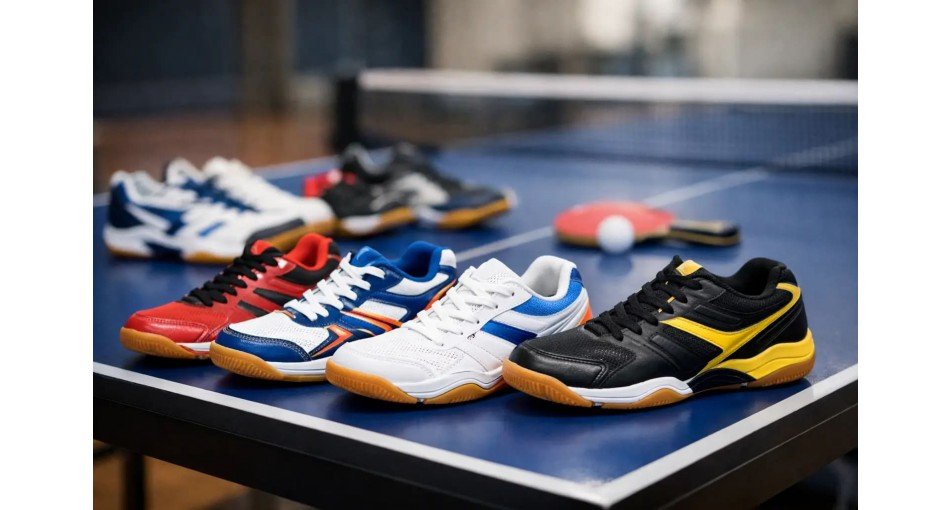
That first hard push into a wide backhand tells you everything about a shoe. If the outsole grabs too late, you feel half a step behind. If the upper rolls, your foot shifts before the rally is even won or lost. Indoor table tennis is played low, fast, and laterally, so the right shoe is not a small upgrade. It changes how confidently you move.
This guide is built for players who want specialist footwear, not generic court shoes with a table tennis label attached. The best table tennis shoes for indoor court use need reliable grip on sport hall flooring, a stable platform for side-to-side movement, and enough flexibility to keep you quick in short explosive patterns. Weight matters, but not more than balance. A super-light shoe that folds under pressure is rarely the better choice for serious league or tournament play.
Table tennis movement is different from badminton, volleyball, or indoor training circuits. You are repeatedly loading the forefoot, recovering from low stances, and changing direction in very short distances. That means the best shoes are usually built around four essentials: grip, lateral support, cushioning, and court feel.
Grip is the starting point. On indoor courts, especially polished sports floors, dusty club halls, or older multi-use surfaces, outsole compound matters as much as tread shape. You want traction that bites during the first push without feeling sticky or slow when you need to adjust your feet quickly.
Lateral support is just as important. Table tennis footwork is not about long sprints. It is about sudden side loading and recovery. A shoe with weak sidewall structure can feel fine in the warm-up and unstable once the pace rises.
Cushioning is where preference starts to split. Some players want a lower-to-the-ground ride for sharper court feel. Others, especially heavier players or anyone training several times a week, benefit from more impact protection. There is no universal best setup here. It depends on body weight, playing frequency, and how aggressive your movement patterns are.
The Wave Drive has a strong reputation for a reason. It is quick, refined, and built for players who want premium footwork response. The outsole grip is excellent, and the shoe feels agile without becoming flimsy. Advanced players who stay very active on the balls of their feet usually adapt to it fast.
The trade-off is cushioning. It is responsive rather than plush, so if you prefer a softer underfoot feel, another model may suit you better.
If you like Mizuno quality but want a little more structure and support, the Wave Medal is a very strong indoor option. It offers dependable traction, a more secure chassis, and enough cushioning for regular club and competition use.
This is a good fit for all-around attackers, two-winged loopers, and players who want stability without a bulky feel.
The Lezoline Rifones is one of the more complete table tennis shoes on the market. It blends comfort, support, and grip in a way that works for a wide range of players. It does not feel extreme in any one direction, which is exactly why so many club and league players rate it highly.
If you want a reliable do-it-all model rather than a very minimal or very cushioned shoe, this is a smart choice.
The Unizes is often appealing to players who want Butterfly performance at a more accessible level. It offers solid indoor traction and a comfortable fit, with enough support for regular training and match play.
Compared with higher-end models, it may not feel quite as dynamic or premium under heavy use, but it still covers the fundamentals well.
JOOLA has produced several indoor court models that suit developing and intermediate players well. The better JOOLA options tend to focus on stable movement, decent shock absorption, and practical comfort over ultra-light speed.
That makes them a sensible choice for players moving out of general indoor trainers and into sport-specific table tennis footwear.
While not a pure table tennis model, the Gel-Rocket is widely used on indoor courts and can work well for many players. It brings reliable grip, familiar ASICS fit quality, and enough support for club-level footwork. For players crossing over from volleyball or squash footwear, this is often a comfortable transition.
The caution here is feel. It is slightly more generalist than dedicated table tennis shoes, so elite-level players may find it less precise.
The Upcourt is another budget-friendly indoor option. It is light enough for regular movement work and offers respectable traction on most indoor surfaces. For juniors, beginners, or players who train once or twice a week, it can be a practical entry point.
It is not the most supportive choice for explosive movement, so stronger competitors usually end up wanting more structure.
Victor is better known in badminton circles, but some of its indoor shoes translate very well to table tennis. The A170 gives you grip, lightness, and a low-profile feel that suits quick footwork. Players who prefer a fast, nimble sensation often get on well with it.
As with many lighter indoor shoes, fit is important. If your foot moves inside the upper, performance drops quickly.
Certain Yonex indoor models also perform well for table tennis, especially for players who like a smoother cushioned ride. The Power Cushion setup absorbs impact well and can be helpful for longer sessions or players with joint sensitivity.
The trade-off is that some models feel slightly less connected to the floor than the sharpest specialist table tennis shoes.
Donic indoor shoes are often designed with table tennis movement in mind and tend to offer balanced value. They usually combine decent flexibility, stable lateral behavior, and enough comfort for regular training. They may not always get the same attention as Mizuno or Butterfly, but they are often worth a close look for players who want sport-specific design without overspending.
Fast attackers who step around a lot and load hard into wide angles should prioritize grip and lateral containment first. Lightweight is useful, but only if the shoe keeps the foot centered during recovery. Models like the Mizuno Wave Drive or Wave Medal usually make more sense here than softer, more general indoor shoes.
Frequent training changes the equation. Even if you like a direct court feel, repeated impact adds up. A shoe with a bit more cushioning and upper durability often becomes the better long-term choice. For this kind of usage, balanced models such as the Lezoline Rifones or more supportive Mizuno options tend to hold up well.
Juniors need grip and support, but they do not always need the highest-end model. Fit and security are more important than chasing the lightest premium shoe. A properly fitted mid-range indoor court shoe will usually outperform an expensive model that is too long or too loose.
This is where brand tendencies matter. Some players find Mizuno more accommodating, while others prefer the shape of Butterfly or ASICS. There is no substitute for checking fit carefully. A technically excellent shoe that compresses the forefoot will hurt movement and comfort.
The biggest mistake is using running shoes for table tennis. Running shoes are built for forward movement and heel-to-toe transition, not repeated lateral loading. They can feel comfortable at first and still be wrong for the sport.
Another mistake is overvaluing weight. Players often assume lighter always means faster. In reality, a slightly more stable shoe can improve movement more because you trust the plant and push. Confidence in the first step matters more than saving a few grams.
It is also easy to ignore outsole condition. Even excellent indoor shoes lose performance once the grip is worn or the sole is clogged with fine dust. If your movement feels hesitant, the problem may not be your footwork.
If the grip has become inconsistent, the midsole feels flat, or the upper no longer holds the foot securely, it is time. Competitive players who train hard can wear through shoes faster than expected, especially on abrasive hall floors. Waiting too long usually shows up in slower recovery, less confidence on wide balls, and more lower-leg fatigue.
A fresh pair is not just about comfort. It can restore the movement quality you built your game around.
For players comparing specialist options, TTMode.com is a good place to narrow by true table tennis brands instead of sorting through generic indoor footwear. That matters when you want shoes designed around actual table tennis movement patterns.
The right indoor shoe should make your footwork feel cleaner, not louder. When the grip is right, the support is right, and the fit is locked in, you stop thinking about the shoe and start getting to the ball on time.