Cart
Your shopping cart is empty!
It's never too late to fix it :)

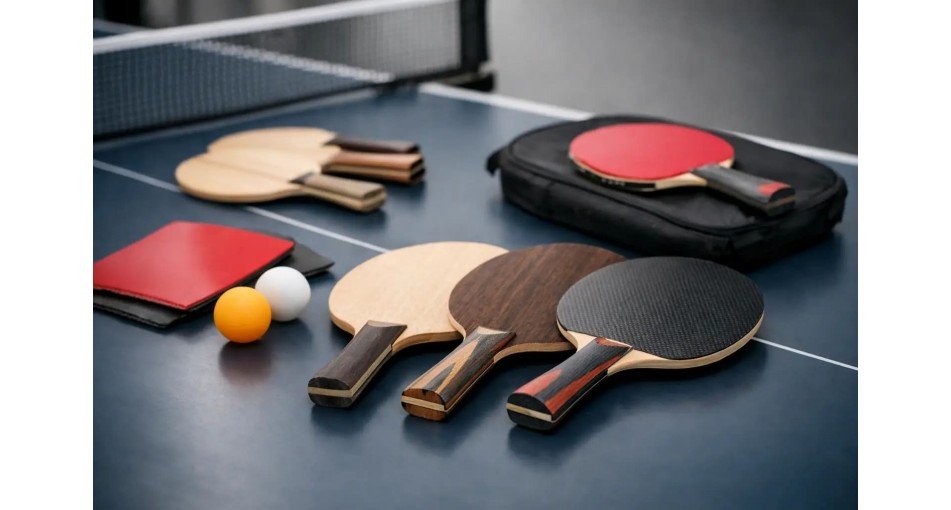
You can feel a bad blade choice in the first five minutes. The short game sits too high, your topspin timing feels late, blocks jump long, or the whole setup seems dead unless you swing harder than usual. That is why players who spend plenty of time comparing rubbers still get stuck when it comes to the blade. The blade is the foundation of the racket. It sets the feel, dwell, balance, and basic speed profile before the rubber even enters the conversation.
If you are trying to figure out how to choose table tennis blade options without wasting money on the wrong setup, start with one simple rule: do not buy by hype alone. A blade used by a top Chinese National Team player can be completely wrong for a club player working on first opening and backhand control. The right choice is the one that matches your technique, your contact quality, and the type of points you are actually winning.
The biggest mistake is choosing by speed rating first. Speed matters, but style matters more.
If you are an aggressive topspin player who wants to initiate from both wings, you will usually benefit from an offensive blade with good rebound, crisp feedback, and enough dwell to lift backspin. If your game is built more around placement, variation, blocking, and consistency, an allround or controlled offensive blade often gives better results than a faster carbon option. And if you are a close-to-the-table hitter or punch blocker, you may prefer a more direct, lower-arc response with a firmer feel.
Defensive players are in a different category altogether. A modern defender may still want a larger head and softer touch for chop control, while keeping enough speed for forehand counterattack. That is why blade selection is never just offensive versus defensive. It is about where you contact the ball, how long your stroke is, and whether you create pressure with spin, pace, timing, or disruption.
A useful way to think about it is this: the more complete and repeatable your technique is, the more blade speed you can realistically use. If your timing still breaks down under pressure, extra speed usually reduces quality rather than adding power.
For most developing players, OFF- or ALL+ is the smart zone. It gives enough power to finish points, but still keeps the short game, serve receive, and passive control manageable. Pure OFF and OFF+ blades can feel exciting in warm-up, yet many players lose more points with them than they win.
That trade-off shows up especially in league play. Fast blades reward clean contact, but they also punish rushed footwork and half-committed strokes. A controlled 5-ply wood blade often lets you play a higher percentage game than a stiffer, harder, faster composite blade.
If you compete regularly, ask yourself what breaks down first in real matches. If it is opening against backspin, touch over the table, or backhand stability, you probably do not need more blade speed. You need better feel and control.
When players ask how to choose table tennis blade construction, they are usually deciding between all-wood and composite.
All-wood blades generally offer more natural feel, clearer feedback, and better touch in the short game. They are a strong fit for improving players, spin-oriented loopers, and anyone who wants more ball sensation through contact. A classic 5-ply wood blade is still one of the safest and smartest choices in table tennis.
Carbon and other composite materials change that feel. They usually increase stability, enlarge the sweet spot, and add extra power on stronger impacts. But not all carbon blades play the same. Some inner carbon constructions keep a softer, woodier feel with added support. Outer carbon blades tend to feel faster, crisper, and more direct.
That means the decision is not simply wood for control and carbon for speed. An innerforce-style blade can be very playable for an advanced club player, while a hard outer carbon blade may be too lively unless your timing is already solid. If you value touch and spin development, start with wood or a controlled inner composite. If you want direct rebound and block stability, a faster composite may make sense.
The number of plies matters, but the outer wood species and overall construction matter just as much.
Five-ply blades often feel more flexible and spin-friendly. They suit players who want dwell time and arc, especially on opening loops. Seven-ply wood blades are usually more solid, stable, and direct, which can help in flat hitting, blocking, and countering. Composite blades add another layer of complexity because the fiber placement and supporting veneers dramatically affect feel.
Harder outer plies usually create a sharper, more immediate response. Softer outer plies tend to feel more forgiving and help hold the ball slightly longer. Neither is automatically better. If you hit through the ball and like a crisp contact, firmer can feel great. If you rely on heavy rotation and touch, a softer feel often gives better confidence.
This is why two blades with similar speed ratings can play very differently. Ratings are useful, but feel is what you actually compete with.
Blade weight is not a minor detail. It affects maneuverability, power transfer, and the final balance once rubbers are attached.
A heavier blade can provide more stability and punch, especially in counterplay. But it also slows hand speed and can make the backhand feel late if your technique is compact. A lighter blade is easier to accelerate and often more comfortable over long sessions, though it may feel less solid on strong impact.
Balance matters too. Some blades are more head-heavy once assembled, especially with harder or max-thickness rubbers. That can help forehand power, but it can also make quick transitions harder. If you rely on fast backhand exchanges over the table, a more neutral balance is often easier to manage.
For many club players, a complete setup that feels easy to swing repeatedly is better than a heavier setup that feels impressive for ten minutes.
Flared, straight, and anatomic handles all have loyal supporters, but the best handle is the one that lets you relax your grip without losing security.
Flared is the most popular because it locks in well for many players. Straight handles can be excellent if you change grip angle a lot between forehand and backhand, or if you prefer a looser hand for spin variation. Anatomic handles are less common, but some players love the filled-in feel.
Do not ignore handle dimensions either. A handle that is too thin can make you squeeze harder, which hurts touch. One that is too thick can reduce flexibility in the wrist. Small details here make a real difference in serve, receive, and transition play.
A blade never plays alone. A medium-fast blade with lively tensor rubbers can easily feel faster than a quicker blade paired with more linear, controlled sheets.
That is why copying a blade from another player without considering the full setup often goes wrong. If you already use hard, dynamic offensive rubbers, you may not need an especially fast blade underneath. If your rubbers are more controlled or tacky and you want more finishing power, a stronger blade can help.
Think in terms of total setup behavior. Ask whether you need more dwell, more direct rebound, better short game control, or greater stability in counters. The blade should solve a problem, not just add speed.
Beginners and early improvers usually do best with allround to controlled offensive wood blades. They build technique, improve touch, and make it easier to develop spin quality. Moving too early to a fast carbon blade often hides technical issues until match pressure exposes them.
Intermediate club players have more room to specialize. If your topspin mechanics are stable, an offensive 5-ply or a balanced inner carbon blade can be a strong step forward. If your game is built around blocking, countering, and quick pressure, a firmer 7-ply or direct composite blade may fit better.
Advanced players can choose more aggressively, but even at that level, faster is not always better. Many strong players still prefer blades with controlled feedback because it helps them in serve receive, first attack, and transition play. The best blade at a high level is the one that holds up under pressure, not the one that looks most impressive on paper.
If you are between two blades, choose the slightly more controlled one unless you already know exactly why you need the faster option. Most players gain more from confidence than from raw rebound.
Also, avoid changing too many variables at once. If you switch blade and both rubbers together, it becomes much harder to understand what actually improved or declined. Equipment testing works best when the goal is specific.
At TTMode.com, serious players usually shop best when they begin with honest self-assessment rather than brand prestige alone. Once you know your style, speed tolerance, preferred feel, and rubber pairing, the right blade category becomes much clearer.
The best blade is the one that lets you play your real game with conviction, especially on the points that matter most.