Cart
Your shopping cart is empty!
It's never too late to fix it :)

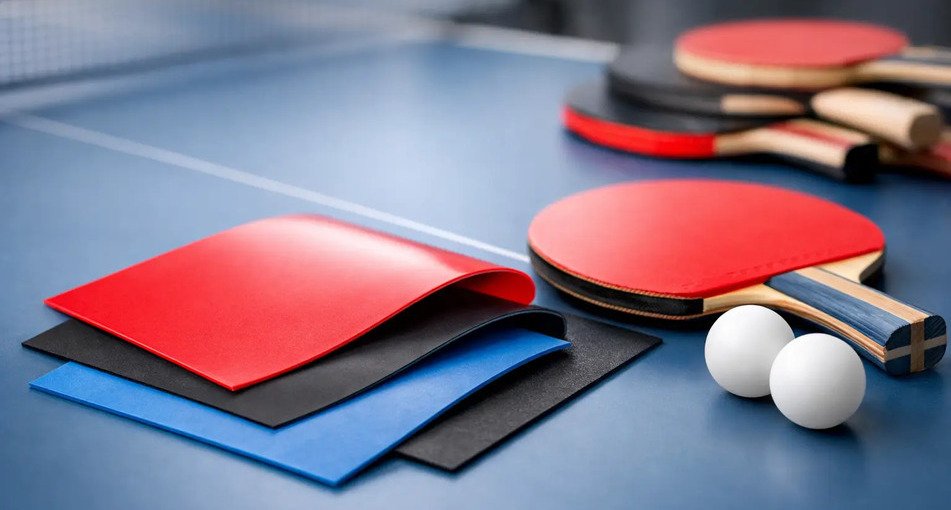
The fastest way to waste money on table tennis rubbers is to buy what a pro uses and expect your game to suddenly sharpen. Rubber choice matters a lot, but only when it matches your level, your blade, and the way you actually win points. For club players, league competitors, and developing juniors, the right setup is usually not the fastest one on the shelf. It is the one that gives you enough spin and pace without taking away confidence on serve receive, opening loops, and short play.
Rubbers do far more than add speed. They shape throw angle, grip on the ball, dwell time, arc over the net, touch in the short game, and how forgiving your racket feels under pressure. Two players can use the same blade and end up with completely different rackets depending on the rubber pairing.
A grippy topsheet with a lively sponge can make opening against backspin much easier, but it can also make passive blocks jump long if your timing is off. A firmer, more direct rubber can sharpen counters and punches, yet feel less helpful when you are trying to load heavy spin on slower contact. That is why serious players look beyond basic speed-spin-control ratings and pay attention to how a rubber behaves in specific match situations.
If you are comparing table tennis rubbers seriously, start with the broad families. Most modern attacking players choose inverted rubbers, but even within that category the feel can be very different.
This is the standard choice for modern topspin play. The smooth, grippy topsheet is designed for loop driving, opening rotation, counter topspin, and active serve play. Within this category, there is a big split between classic grippy European and Japanese-style tensors, harder hybrid rubbers, and tacky Chinese-style sheets.
Tensor-style offensive rubbers usually feel more dynamic. They give easier speed on medium effort and often suit players who want catapult from mid-distance. The trade-off is touch. In the short game, very lively rubber can feel bouncy until your hands adjust.
Hybrid rubbers sit between classic Euro tensors and tacky Chinese sheets. They often combine a grippy or slightly tacky topsheet with a firmer sponge, giving strong spin potential and a more deliberate impact. They are popular with players who want a heavier first topspin and a more controlled short game without going fully traditional Chinese in feel.
Pure tacky Chinese rubbers reward good technique and active acceleration. They can be outstanding on serves, pushes, and opening loops, especially on the forehand. But they usually ask more from the player physically and technically. If your swing is short or your timing is late, they may feel dead compared with a lively tensor.
Not every player needs maximum pace. Allround rubbers remain a smart choice for developing juniors, blockers, combination bat users, and players who value placement over outright power. These rubbers usually have a more linear response, which helps on return, block, and short touch. You give up some finishing speed, but many players win more matches because they land more quality balls.
Hardness is one of the most important details when choosing table tennis rubbers, and it is also one of the most misunderstood. In simple terms, softer sponges generally feel easier to engage and more forgiving on slower contact. Harder sponges usually reward stronger acceleration and cleaner timing.
If you rely on spinny openers, controlled counters, and touch over the table, a medium or medium-soft sponge can feel more cooperative. If your game is built on direct forehand power, punchy backhand counters, and strong ball compression, a medium-hard or hard sponge may give better stability and a heavier ball.
It also depends on the blade. A fast carbon blade paired with very hard rubber can feel crisp and dangerous in the right hands, but too demanding for many intermediate players. On the other hand, a flexible offensive wood blade can make a firm rubber feel more playable and improve dwell on topspin.
Players often jump straight to max thickness because that is what they see on premium offensive setups. Sometimes that is right. Sometimes it is a mistake.
Thicker sponge usually brings more speed, more spin potential, and a stronger catapult effect. Thinner sponge improves touch, keeps the response a little calmer, and can make service return and flat contact more secure. If you are still developing your strokes, dropping slightly from max to 2.0 can improve consistency without making the racket feel underpowered.
On backhand especially, thickness should match how you use the wing. If your backhand is compact and timing-based, a slightly more controlled thickness may help more than raw rebound.
The best rubber is the one that supports your real patterns, not your ideal ones.
A medium-hard to hard rubber with strong grip is often the right direction. If you like to open heavy against backspin and then play the next ball with power, hybrid or harder offensive rubbers make sense. They tend to reward full acceleration and give a more loaded first attack.
Many backhand-focused players prefer a rubber with easier access to speed. A medium sponge, slightly higher catapult, and reliable topsheet grip can make counter topspin and active blocks much easier. If your backhand is more punch and control than spin, a direct and stable sheet may work better than an ultra-soft one.
Go for balance. A linear rubber with good grip and moderate speed will help in more phases of the game than an explosive offensive sheet that only shines on full swings. League matches are often won in serve receive, placement, and the third or fourth ball, not just outright winners.
This is where restraint pays off. A junior with improving technique usually benefits from rubbers that encourage proper acceleration and touch, not from equipment that creates speed automatically. Too much catapult can hide technical issues for a while and then hold development back.
The biggest mistake is chasing headline speed. Fast rubbers are exciting in warm-up, but matches expose everything. If your opening percentage drops or your short game gets loose, the upgrade was not really an upgrade.
Another mistake is ignoring blade-rubber synergy. A rubber that feels excellent on one blade can feel completely different on another. Hard rubber on a stiff carbon blade is not the same experience as hard rubber on a limber 5-ply wood blade.
Many players also copy professional setups too closely. Elite players have timing, footwork, and hand speed that let them control very demanding equipment. Competition-grade gear can be excellent, but it still has to fit the player using it.
Even high-performance table tennis rubbers are consumables. If the topsheet has gone shiny, grip has dropped, or the ball no longer kicks the way it used to, performance is fading. You may also notice your opening loop needs more effort or your serves lose bite.
How long a sheet lasts depends on frequency, playing conditions, and how well you maintain it. A league player training several times a week will wear through rubbers much faster than a once-a-week hobby player. Cleaning the surface and protecting it with film helps, but no rubber stays fresh forever.
If you are stuck between dozens of options, simplify the decision. Start with your level, then your blade, then your strongest wing. From there, ask what you need more of: easier spin, more direct speed, calmer short play, or better control under pressure.
That usually narrows the field quickly. A developing player using an OFF- blade and wanting safer topspin does not need the same rubber as an advanced looper on a fast inner-carbon setup. Brand matters because established lines from Butterfly, DHS, Xiom, Yasaka, JOOLA, Andro, DONIC, TIBHAR, VICTAS, Stiga, and Nittaku all offer different feels, but the real question is which performance profile fits your game.
If you are building or upgrading a setup at TTMode.com, treat rubber choice as a performance decision, not just a product decision. The right sheet should make your best patterns easier to repeat.
A good rubber does not just make the ball faster. It makes your game clearer, your strengths more reliable, and your next session more productive.