Cart
Your shopping cart is empty!
It's never too late to fix it :)

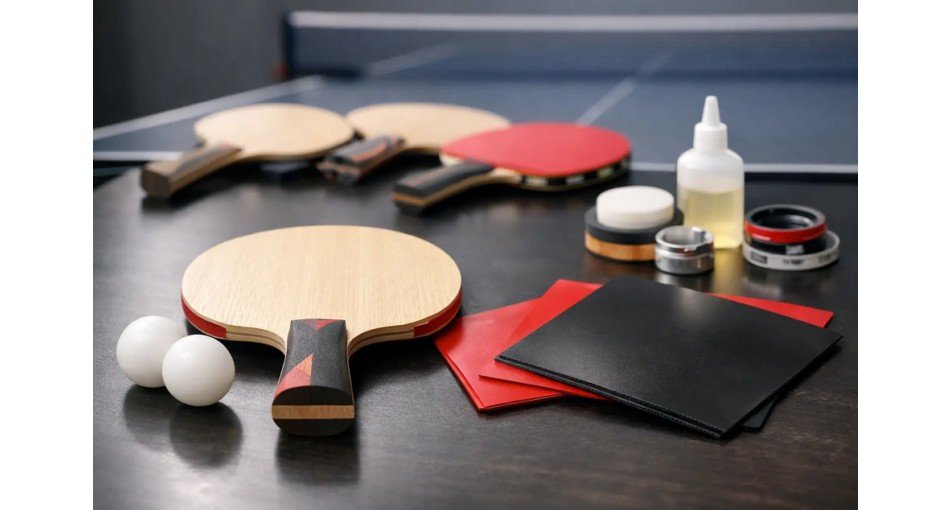
If you search for a ma long blade setup, you usually want one of two things - the exact pro-style build, or a version that gives you the same offensive feel without becoming unplayable at club level. Those are not the same purchase. Ma Long’s setup is built for world-class timing, explosive forehand commitment, and elite touch over the table. For most players, the smarter move is to understand why his racket works, then build around those characteristics.
Ma Long is the reference point for modern Chinese forehand-first attacking table tennis. His racket needs to support heavy opening loops, direct counterloop exchanges, stable blocking, and very precise short game control. That mix points to a blade setup with high-end power, solid dwell, and enough stiffness to keep the ball trajectory penetrating under pressure.
The version most players associate with him centers on a 5+2 inner carbon offensive blade paired with tacky Chinese forehand rubber and a faster, more elastic backhand rubber. That combination matters more than chasing one product name in isolation. The blade gives him controlled power and a connected feel, the forehand rubber lets him load spin and drive through the ball, and the backhand side supports compact topspin and active pressure.
This is why copying a pro racket blindly can go wrong. A setup designed for full-body acceleration and perfect contact often feels hard, heavy, and demanding in normal league play.
At the center of a typical ma long blade setup is an inner carbon offensive blade in the Hurricane Long line. These blades are known for a woody feel on softer shots, with carbon support kicking in when you accelerate harder. That makes sense for a player who uses touch in the short game but still wants serious finishing power from mid distance.
Compared with outer carbon constructions, inner carbon blades usually feel a little more flexible and controlled in the short game. The ball sinks in slightly longer, which helps on spin creation and touch play. At the same time, when you commit to a strong forehand, the blade still has the backbone needed for high-speed attacks.
For players trying to recreate Ma Long’s style, this matters. His game is not just brute speed. It is loaded with variation - short touch, heavy first loop, strong transition ball, then full power when the opening appears.
This is the defining piece. Ma Long is strongly associated with DHS Hurricane 3 on the forehand, often in a high-performance national or professional-grade version. The reason is simple: tacky topsheet grip plus a hard sponge creates huge spin potential and a very direct, committed contact. On the right stroke, the ball quality is exceptional.
The trade-off is equally clear. Hurricane-style forehand rubbers ask for good technique, acceleration, and confidence against backspin. If your forehand swing is compact or passive, the rubber can feel slow and unforgiving.
On the backhand, the setup is usually more dynamic and easier to activate. Ma Long has used faster tensor-style or spring sponge-style backhand rubbers that support punchy topspin, compact counters, and aggressive backhand exchanges. This is standard for many high-level Chinese forehand-oriented players - sticky and hard on one side, lively and elastic on the other.
That split makes the racket more balanced than it first appears. The forehand is spin-loaded and dominant, while the backhand keeps the game fast and reactive.
Usually, no. At least not all at once.
The exact pro build is exciting, but it often creates more problems than benefits for developing and intermediate players. A hard inner carbon blade with a demanding tacky forehand and a quick backhand can become too heavy, too fast in transition, and too technical in serve receive or passive play.
If you are an advanced attacker with a strong forehand and regular training volume, you may genuinely enjoy it. If you are a solid club player still refining consistency, a moderated version is often the better buy.
That does not mean abandoning the Ma Long idea. It means taking the playing principles and choosing gear that gives you usable performance.
The best version for most players starts with the same structure, but slightly easier components.
If you like the concept, start with an inner carbon offensive blade rather than an extreme outer carbon rocket. You want a blade with good touch, clear feedback, and enough power reserve for third-ball attack and counterlooping. The Hurricane Long family fits this profile, but similar inner carbon offensive blades from Butterfly, Xiom, DONIC, Yasaka, and VICTAS can also make sense if you prefer a slightly different balance or handle feel.
The key is not just speed rating. Look for a blade that feels stable on blocks and opening loops without becoming too crisp in the short game.
If your technique is developed and you train seriously, Hurricane 3 remains the obvious reference. It gives you the spin-loaded, direct forehand character that defines this setup style. If you have the mechanics to engage it, the reward is a heavy, dangerous ball.
If you do not consistently accelerate through the ball, consider a hybrid rubber instead. A good hybrid can preserve some tackiness and spin emphasis while offering easier speed and a more forgiving response. That makes it much more practical for league players who want a Chinese-style forehand feel without full pro-level demands.
For the backhand, most players should avoid going too hard. A lively offensive rubber with medium or medium-hard feel is usually the sweet spot. You want enough catapult for quick topspins and counters, but still enough control for serve receive and blocking.
This is where balance matters. If your forehand side is hard and linear, the backhand side should help you play more freely.
One part many players underestimate is total racket weight. A Ma Long-inspired setup can get heavy fast, especially with a dense blade and hard rubbers in max thickness. Some players love that solid impact. Others find their recovery, wrist speed, and backhand timing suffer.
If you are unsure, keep at least one side at a manageable sponge thickness or choose a slightly lighter blade specimen. A setup that feels great for 20 minutes but becomes slow in the fifth set is not the right setup.
A Ma Long-inspired racket works best for offensive players who want to lead with the forehand, value spin quality, and have the technique to accelerate confidently. It especially suits players who open hard against backspin and like to finish points with powerful topspin rather than just fast flat hitting.
It is less suitable for players who rely on soft touch all the time, block passively, or prefer a very catapult-driven Euro-Japanese feel on both wings. Those players often get better results from a more elastic offensive setup that asks less from the stroke.
This is where honest self-assessment matters. Buying for identity is easy. Buying for your actual match level is harder, but it usually saves money and improves results faster.
When the setup is right, you get a very specific playing experience. Short pushes stay controlled, serves can carry heavy spin, and the first forehand topspin feels loaded and direct. In open rally play, the blade gives enough stability to counter with confidence, especially from the forehand side.
The downside appears when your timing is late or your acceleration drops. Hard tacky forehand rubbers do not give away free speed. If your footwork is off, the ball quality drops quickly. That is why some players love this style in training but struggle with it in competition.
If that sounds familiar, the answer is not always a new blade. Sometimes it is simply moving to a slightly easier forehand rubber while keeping the same blade architecture.
The best ma long blade setup is not the most expensive one or the one closest to a pro equipment sheet. It is the one that preserves the core idea - controlled offensive blade, spin-dominant forehand, dynamic backhand - while still matching your level, strength, and match habits.
For serious players shopping performance equipment, that is the smarter standard. At TTMode.com, this is exactly how a pro-inspired setup should be approached: not as a costume, but as a tool. Start with the playing profile, make realistic choices on hardness and weight, and build a racket you can trust when the score gets tight.
The right setup should make you want to play bigger on the forehand, not make you afraid to swing.