Cart
Your shopping cart is empty!
It's never too late to fix it :)

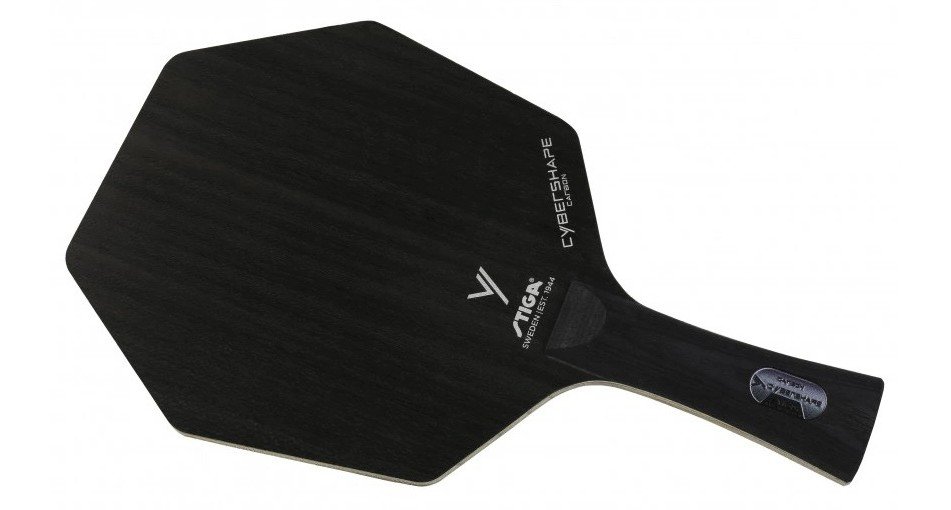
The first thing you notice in any serious Stiga Cybershape blade review is not the carbon layup or the speed rating. It is the shape. The hexagonal head looks radical on the table, in the hand, and especially in match play when opponents clock it for the first time. But after the novelty wears off, the real question is simple: does Cybershape actually play better, or is it just a clever design story?
For the right player, it is absolutely more than a visual gimmick. The Cybershape concept brings a distinct contact feel, a slightly different balance profile, and a very direct response that offensive players will either love immediately or need time to understand. It is not a blade for everyone, and that is exactly what makes it worth reviewing properly.
Stiga built the Cybershape around a non-traditional head geometry that changes the usable hitting area and shifts how the blade behaves in compact and full strokes. The more angular top section gives a broader contact zone in the upper part of the blade, where many players strike the ball during topspin exchanges. In practical terms, that can make the blade feel more stable on attacking contact, especially over the table and in fast rally situations.
The shape also affects balance. Compared with a classic rounded blade, Cybershape can feel a touch different through the wrist, particularly on backhand counters and punch blocks. Some players describe it as quicker through the air. Others simply notice that the contact point feels more defined. Either way, this is not a standard offensive blade wearing a new cosmetic. The geometry changes the experience.
That said, shape alone does not decide performance. The Cybershape family includes different constructions, and the flagship offensive versions combine that unusual head design with a crisp, modern offensive structure. The result is a blade that tends to favor active play, direct timing, and confidence in the first attacking ball.
In pure offensive terms, Cybershape sits in the high-performance category. It is quick enough for aggressive topspin play, but it is not just about raw pace. The stronger point is how cleanly it transfers energy on committed strokes. When you accelerate, the blade responds with a firm, precise rebound that suits modern attacking technique.
On topspin, especially from the backhand side, the blade feels sharp and efficient. The ball leaves the racket decisively, which helps in quick exchanges and close-to-table pressure. On the forehand, players with good acceleration will get strong penetration, but this is not the kind of blade that automatically adds arc and dwell to every ball. If your game depends on heavy hold and a softer, more elastic sensation, Cybershape may feel more mechanical than ideal.
Control is where the conversation gets more interesting. For an offensive blade, control is strong if your technique is active and your timing is clean. Blocking feels solid, countering is one of its better areas, and directional placement is convincing once you adapt to the contact. Passive touch, however, is a bit more demanding. Short play is not wild, but it does reward a confident hand rather than a hesitant one.
This is one of the key trade-offs. Cybershape gives a lot to players who strike positively. It gives less to players who want the blade to soften the game for them.
In serve and receive, the blade offers decent precision, but the feel is on the crisp side. Short underspin serves can be loaded well if your hand is relaxed and fast enough through the ball. Flicks are a clear strength. The shape and direct response work well for aggressive receive, especially backhand flicks and quick banana openings.
In open play, the blade really starts to justify itself. Counter-topspin and fast transition play are where it looks most convincing. The upper contact area feels reliable in modern rally patterns, and that adds confidence when taking the ball early.
In blocking, Cybershape performs well because the face feels stable and predictable. Players who like to redirect pace rather than just absorb it should get on with it quickly. Defensively, away from the table, it is usable but not naturally defensive. If your game includes a lot of fishing, high-arc reset balls, or soft spin variation from distance, there are easier blades to live with.
This blade suits offensive players first. If your game is built on backhand initiative, quick counters, early timing, and taking control in the first two attacking shots, Cybershape makes a lot of sense. It also fits ambitious club players who want a blade that feels modern, fast, and distinct without drifting into completely uncontrollable territory.
Advanced juniors and league players with developed technique are a particularly good fit. They tend to benefit from the clean response and the confidence the blade gives in compact attacking exchanges.
Beginners and lower intermediate players are less obvious candidates. Not because the blade is impossible to use, but because they usually benefit more from extra dwell, easier touch play, and a more forgiving allwood feel. If your stroke mechanics are still developing, Cybershape can feel a little too honest. It tells you exactly what you did on contact, which is useful for improvement but not always flattering.
Compared with a classic offensive blade shape, Cybershape feels more specialized. Traditional offensive blades often aim for familiar balance, broad compatibility, and easier adjustment across all phases of play. Cybershape leans more toward attacking efficiency and a distinctive response.
If you are coming from a popular inner-carbon blade with a softer, deeper feel, Cybershape may seem crisper and flatter in trajectory. If you are moving from a harder outer-carbon setup, the transition may feel easier, especially if you already like direct rebound and punchy backhand play.
This matters because player expectations are everything in blade selection. Some buyers hear the hype, see the shape, and expect a universal upgrade. That is not really how it works. Cybershape is better viewed as a performance choice for a certain attacking profile rather than a straight replacement for every offensive blade.
Rubber choice has a big impact on how Cybershape behaves. Pair it with very hard, very fast rubbers, and the setup can become exceptionally dangerous in attack but also less forgiving in the short game. Pair it with medium-hard dynamic rubbers, and many players will find a better balance between direct speed and usable control.
For players who want to maximize the blade's strengths, an offensive hybrid or grippy tensor setup often works well. On the forehand, something with a bit of dwell can help round out the contact. On the backhand, a quick, precise rubber can turn the blade into a serious weapon in counters and flicks.
This is one of those blades where smart pairing can completely change your verdict. A poor rubber match may leave you thinking the blade is too sharp or too flat. The right combination can make it feel fast, stable, and highly dangerous.
Yes, but only if that advantage connects with how you play. The larger effective contact area in the upper part of the blade is not marketing fluff. In fast topspin exchanges, many players will feel that extra confidence. The shape also gives Cybershape its own identity in handling and contact.
Still, the advantage is not magical. It does not erase poor timing, and it does not automatically improve spin quality. If your technique is sound, the design can support your attacking game. If your fundamentals are inconsistent, the shape alone will not rescue the setup.
That is the honest answer most serious players want from a Stiga Cybershape blade review. The blade is innovative, but the performance gains are conditional.
Cybershape is one of the few modern blade releases that genuinely feels different on the table. It delivers strong attacking performance, a crisp and stable response, and real appeal for players who build points with early timing and pressure. It is especially convincing on backhand aggression, counter play, and direct offensive exchanges.
The trade-off is that it asks something from the user. Touch play is less forgiving than softer alternatives, and not every player will enjoy the firmer, more immediate feedback. But for offensive-minded players who want a blade with a clear identity, Cybershape is not a novelty purchase. It is a serious performance option.
If your game is moving toward faster initiative and cleaner, more decisive contact, this is the kind of blade that can make your setup feel one step more dangerous.
/Stiga-CYBERSHAPE-Wood-200x200.jpg)
/5238_ca9e04cf89-stiga-tennis-table-blade-destiny-cybershape-master-1-full-200x200.jpg)
/5193_a6dee4e468-aura_cs_master_1jpg-1-original-200x200.jpg)