Cart
Your shopping cart is empty!
It's never too late to fix it :)

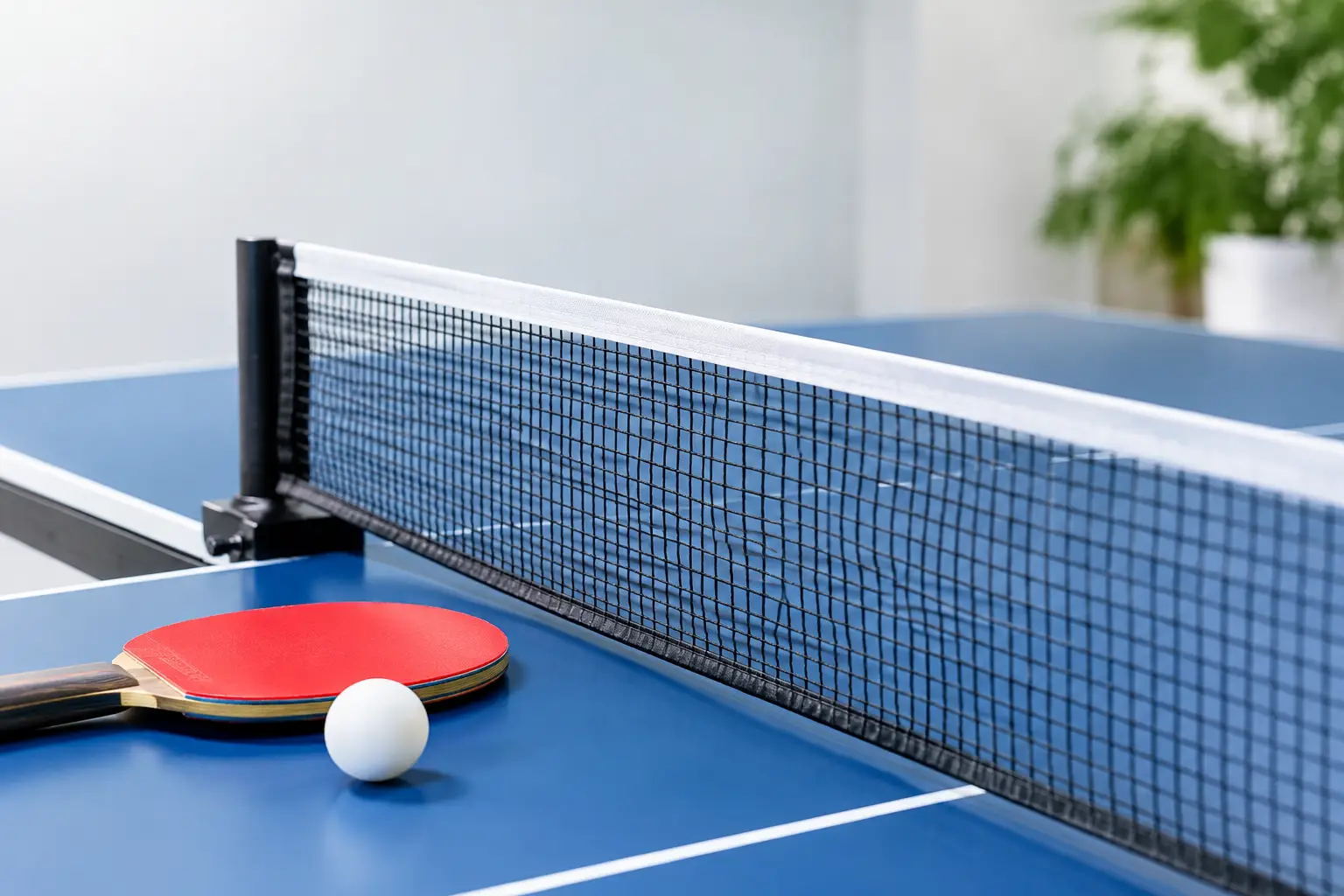
A loose or uneven net can turn a clean third-ball attack into a frustrating edge ball. That is why table tennis nets deserve the same practical attention as balls, rubbers, and table condition. For club players, coaches, and home users training with intent, the right net assembly keeps the playing area legal, holds its tension through long sessions, and stays fixed when the ball clips the cord at pace.
A table tennis net is a simple piece of equipment with a precise job. It divides the table at a regulated height while allowing a ball to react consistently when it catches the tape or mesh. If the top cord sags in the middle, low serves suddenly become easier to clear. If the clamps shift after a few rallies, players lose confidence in short touch shots and flicks close to the net.
At match speed, small differences are noticeable. A firm net tape produces a more predictable let ball. A flimsy assembly can absorb impact, pull downward, or move toward the server after repeated contact. None of this makes a player better or worse by itself, but it affects the quality of every drill built around serving, receiving, and playing over the table.
For serious use, focus on three variables: clamp security, height adjustment, and net tension. A well-made post-and-net set lets you set each variable quickly without damaging the table surface.
For sanctioned play, the net assembly must be 6 inches, or 15.25 cm, high across its full width. The net should project 6 inches beyond each side of the table and its bottom edge should sit as close as possible to the playing surface. The supporting posts are positioned 6 inches outside the sidelines.
Those numbers matter most when a table is used for league fixtures, coaching sessions, or tournament-style practice. A player preparing for competition should practice over the same net height they will face on match day. It is especially relevant for heavy backspin serves, banana flick returns, and controlled pushes that pass only centimeters above the tape.
A basic ruler is enough to check height, but a built-in measuring device on the net post makes setup faster. On club nights, that saves time and prevents arguments about whether the center of the net has dropped.
The best choice depends on the table, frequency of use, and whether portability matters more than regulation-level stability.
A screw-clamp set is the benchmark for regular training. The clamp tightens progressively, so it can hold securely on a range of table edges without relying on excessive spring force. Look for padded contact points to protect painted or laminated surfaces, particularly on premium indoor tables.
The main performance benefit is tension adjustment. A quality tension cord pulls the mesh evenly from post to post, while a separate height adjustment lets you correct the net without changing the clamp position. This is the format to choose if players train multiple times each week or if the table hosts league matches. A useful next read on TTmode.com is 5 Top Table Tennis Nets for Home Players.
Spring-clamp designs are popular because they are fast. Attach both posts, check the center height, tighten the cord, and play. A good spring clamp has enough grip to resist movement without requiring a hard squeeze that can mark a delicate table edge.
They work well for home tables and busy clubs where equipment is repeatedly installed and removed. However, not every spring clamp fits every table. Thick table tops, unusually shaped aprons, and heavily padded edges can prevent a secure fit. Measure the table edge and inspect the clamp opening before buying.
A retractable net is the practical answer when a permanent table is not available. It can turn a dining table, conference table, or outdoor surface into a compact practice area in seconds. For beginners, family play, and hand-eye coordination drills, that flexibility has real value.
The compromise is match fidelity. Retractable mesh usually cannot match the straightness, cord tension, or impact response of a fixed post assembly. It is a smart secondary net, not the first choice for an advanced player refining serve quality or preparing for competition.
Use this specification table when comparing table tennis nets. The numbers help separate a convenient accessory from a net designed for sustained club use.
Material choice is not only cosmetic. Nylon mesh generally handles frequent setup, humidity, and club wear well. Cotton-blend nets can offer a more traditional appearance and feel, but they may need more careful storage to avoid stretching. For an outdoor table, weather-resistant synthetic mesh and corrosion-resistant posts are the safer route.
Before a session, attach both posts without overtightening the clamps. Set the net height at the center first, then tension the cord until the top tape runs straight without pulling the posts inward. Check that the bottom of the mesh is close to the tabletop and that both extensions are even beyond the sidelines.
A useful club-level test takes less than a minute. Roll a ball gently along the top tape from each side, then play several low pushes and backspin serves through the center and near both posts. Watch for sagging, side-to-side drift, or a clamp that lifts when the ball contacts the net. These are practical signs that the assembly needs adjustment or replacement.
Do not judge a net only by its first installation. Repeat the check after an hour of multiball or high-volume serve practice. Budget clamps can gradually loosen, while low-grade tension cords can stretch. A net that stays level after sustained use is the one that will serve a serious training environment best.
Remove dust from the mesh and clamp pads with a dry cloth, especially in busy club spaces where chalk, floor debris, and ball residue build up. Avoid storing the net while wet after outdoor use. Moisture can affect mesh tension and eventually corrode metal hardware.
When packing a screw-clamp net, release tension before folding or storing it. Keeping the cord constantly stretched can shorten its useful life. If the net begins to bow, first inspect the cord and clamp alignment rather than immediately replacing the full set. Often, a simple adjustment restores a level playing surface.
No. Regulation table tennis nets must be 6 inches, or 15.25 cm, high. Recreational and retractable models can be less precise, so check the height before using one for competition-focused practice.
Choose a screw clamp for the most secure fit, regular club use, and tournament-style training. Choose a spring clamp when fast setup matters and your table edge is compatible with the clamp opening.
It can support basic drills, serve practice, and family play, but it will not usually provide the tension or stability needed for precise match simulation. Use a fixed net set for advanced training.
The tension cord may be loose or stretched, the posts may not be aligned, or the height adjustment may not be set correctly. Check those points before replacing the mesh.
A reliable net will not win the point for you, but it removes one variable from every point you play. Set it to regulation height, keep it tight, and let your touch over the table do the talking.