Cart
Your shopping cart is empty!
It's never too late to fix it :)

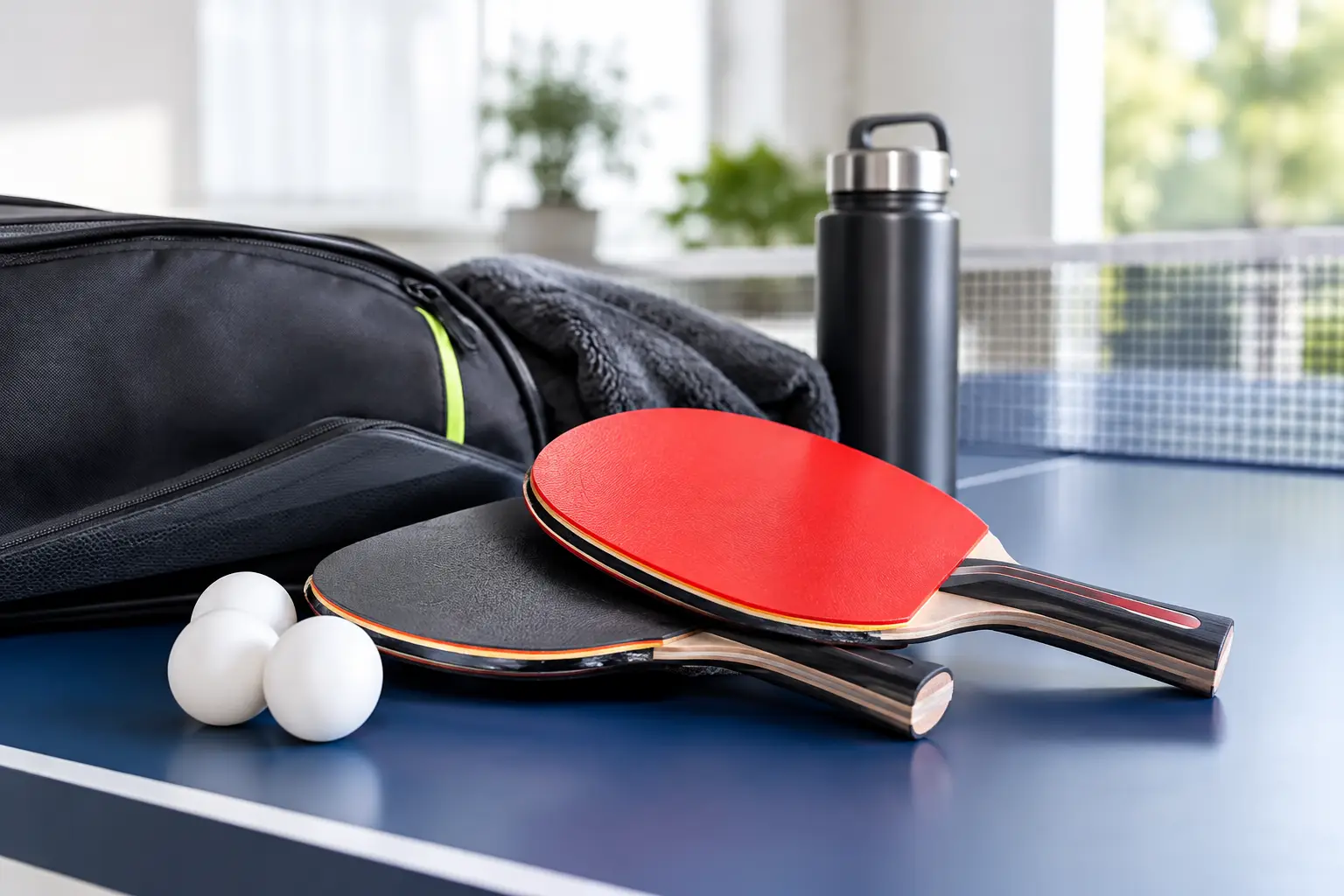
The most useful competition table tennis gear trends are not about chasing whatever an elite player used in their latest tournament. They are about equipment becoming more specialized. Rubbers are built to create a higher arc without losing bite, blade constructions are tuned for a larger sweet spot, and footwear is finally being treated as performance equipment rather than an afterthought. For league competitors, ambitious juniors, and coaches building players toward tournament play, that specialization creates better options - and more ways to choose poorly.
The modern offensive rubber is increasingly a hybrid: a grippy or mildly tacky topsheet paired with a lively tensor-style sponge. This design aims to give players two things that once required very different sheets - heavy rotation on slow contact and direct speed when the ball is struck firmly.
The appeal is obvious for the modern topspin game. A hybrid rubber can load a short serve, hold the ball longer on the opening loop, and still drive through the opponent's counterspin. The trade-off is that these rubbers reward a committed stroke. A 52.5-degree sponge may feel precise and dangerous in a fast forehand swing, yet underperform for a player who relies on compact, passive contact.
Do not choose by hardness alone. Sponge scale numbers vary by manufacturer, and topsheet tension changes the sensation dramatically. A 50-degree rubber with a softer topsheet can feel more forgiving than a supposedly softer sheet from another brand. Match video and controlled drills tell you more than a catalog number ever will.
The old question was simple: all-wood feel or composite speed? Competition players now have more middle-ground choices. Thin inner-fiber constructions, carefully selected outer veneers, and refined handle shapes are producing blades that keep an all-wood-style dwell time while adding stability on hard counters.
This matters because the pace of the game has increased. Players need enough hold for serve receive, slow spin openings, and touch shots, but they also need the blade face to stay dependable when absorbing a powerful loop. The current sweet spot is often an OFF- or controlled OFF blade, not the fastest OFF+ option in the rack.
Weight is a major part of the trend. A blade listed at 88 g can become a 185-195 g finished racket with two max-thickness rubbers. That may be ideal for a strong adult who generates power from the forearm and body rotation. For a junior, a player with wrist fatigue, or someone developing a quick backhand over-the-table game, 175-185 g is often the more productive target.
A competition setup should support the shots that decide most points: serve, receive, and the first attacking ball. That is why a very fast blade paired with two hard max-thickness rubbers can be a poor upgrade for a player whose receive game is still developing. It may look professional, but it can turn half-long serves and touch returns into unnecessary errors.
For forehand-dominant loopers, a tacky hybrid on the forehand and a slightly softer grippy rubber on the backhand remains one of the strongest current combinations. It gives the forehand enough bite for spin-heavy third-ball attacks while making the backhand easier to block, flick, and counter.
For a balanced two-wing attacker, matched medium-hard rubbers on an inner-composite blade offer a cleaner response. Players who stay close to the table may prefer a firmer backhand sheet for punches and counters, while players who rely on backhand flicks often benefit from a slightly softer, more elastic option.
Before changing equipment, use a simple evaluation log across at least two sessions. Test on the same table, with the same ball type when possible, and include both match play and repetition drills. Record whether the racket improves the quality of your intended ball, not whether it produces one spectacular winner.
If your new setup improves counterloop speed but costs you four serve-receive errors per set, it is not automatically an upgrade. The right decision depends on your playing level, physical strength, and tactical identity.
Shoes are one of the clearest practical trends. Serious table tennis footwear now prioritizes low stack height, forefoot flexibility, lateral containment, and non-marking gum-rubber traction. A running shoe may feel cushioned, but its raised heel and soft sidewall can slow lateral recovery and feel unstable when you plant for a wide forehand.
Apparel is also becoming more functional. Lightweight polyester fabrics, breathable back panels, and cuts that allow a full shoulder turn are worthwhile, particularly in long tournament days. The benefit is not fashion alone. A shirt that catches at the shoulder or shorts that restrict a deep receive stance become distractions when the score reaches 9-9.
Robot training, quality practice balls, and compact recovery tools are increasingly part of a competitive equipment plan. The key is to buy training gear that targets a measurable weakness. A robot with programmable placement is valuable when you need volume on a backhand flick pattern or transition footwork. It is less useful if it becomes a substitute for learning to read a real opponent's serve.
For match preparation, use competition-grade plastic balls for serious drills whenever possible. Ball feel varies across models, but a consistent premium ball generally offers truer bounce, better roundness, and more predictable spin response than worn training stock. Keep fresh balls for serves, multiball, and pre-match warm-ups, then separate damaged balls immediately. A useful next read on TTmode.com is Mizuno Medal Review for Serious Table Tennis.
The trend worth following is purposeful selection. Choose a racket that makes your best patterns more repeatable, shoes that help you move with confidence, and training tools that expose weaknesses before an opponent does. That is how new gear earns its place in a competition bag.
Not exclusively, but they are usually best for players who generate their own acceleration and already loop against backspin with reasonable mechanics. Developing players often improve faster with a medium-hard, grippy rubber that offers more easy depth and a larger margin over the net.
Many adult competitors land between 180 and 190 g. A lighter setup can improve wrist speed and recovery, while a heavier setup can feel more stable through the ball. The best weight is the one that stays quick and comfortable late in a five- or seven-game match.
You can, especially if you play a symmetrical two-wing topspin game. Different forehand and backhand rubbers make sense when your forehand is a full power stroke but your backhand relies more on blocking, flicking, and compact counters.
Players who train several times a week commonly replace their main sheets every two to four months, depending on style, cleaning habits, and the rubber itself. Replace sooner when grip drops noticeably, the topsheet becomes slick, or the sponge loses its consistent response.
Yes, if you compete regularly. Proper court shoes improve grip, stability, and lateral confidence. They will not fix footwork technique, but they give good footwork a more reliable platform when the floor and match intensity become demanding.