Cart
Your shopping cart is empty!
It's never too late to fix it :)

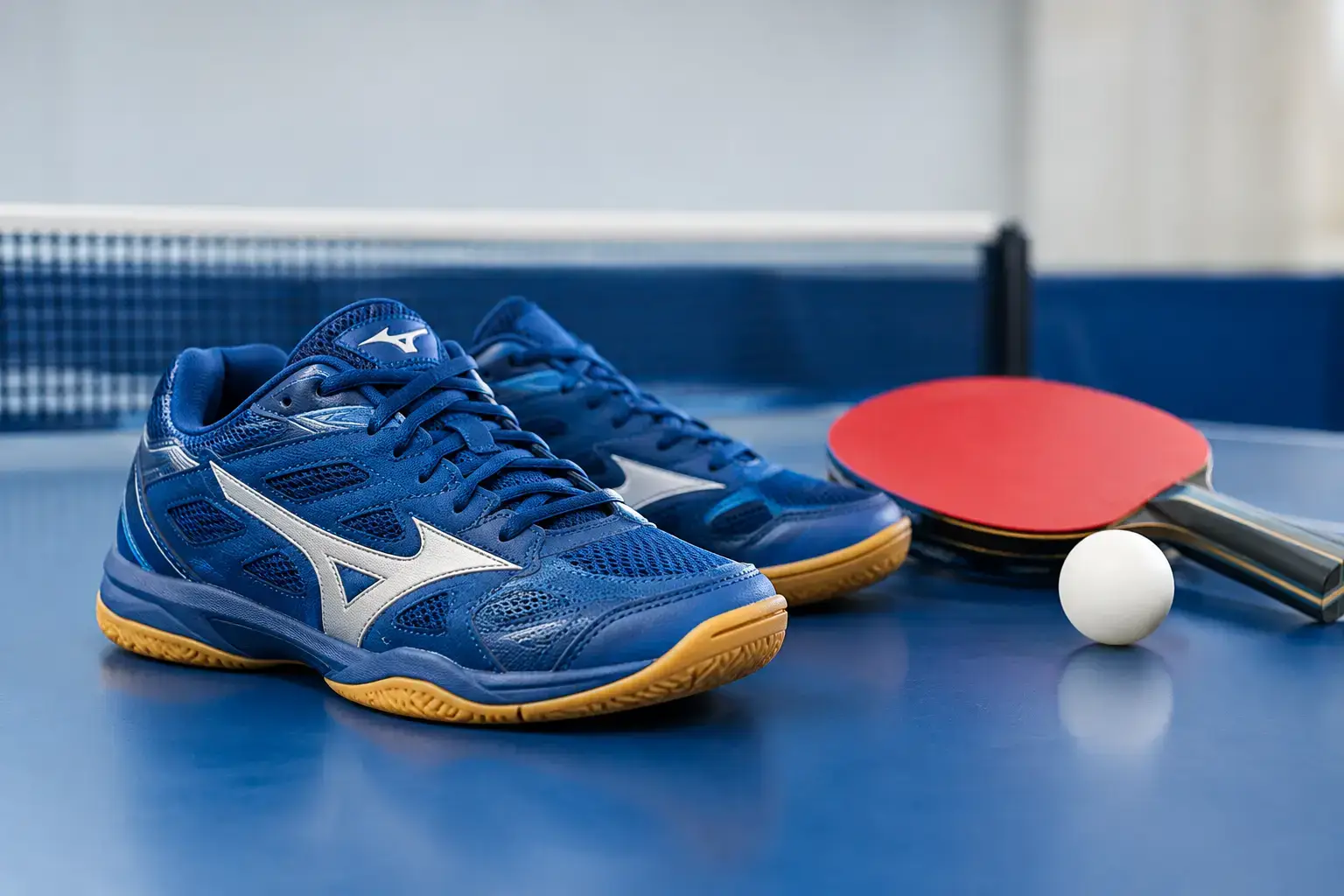
Looking for a dedicated indoor court shoe that handles rapid direction changes and explosive lateral footwork? Mizuno table tennis shoes deliver low-profile stability, dependable non-marking grip, and secure foot lockdown for competitive play. They keep your base planted during wide forehand recoveries without compromising first-step reaction speed.
Mizuno table tennis shoes feature a low center of gravity, non-marking gum-rubber traction, and structured heel support to hold the foot during sharp lateral braking. Unlike general trainers, they provide progressive grip that allows fast rotational pivots while preventing slippage during powerful crossover steps on indoor floors.
Mizuno approaches table tennis footwear from a court-sport perspective: low center of gravity, non-marking gum-rubber traction, structured heel support, and uppers that hold the foot during lateral braking. That combination matters when a rally forces several hard changes of direction in only a few seconds.
The most noticeable trait is usually the balance between grip and freedom. A shoe that grips too aggressively can make pivots feel sticky. A shoe with a flat, low-quality sole can slide when dust builds up around the table. Mizuno’s indoor outsole patterns are designed to give progressive grip - enough purchase for a powerful crossover step, without making fast rotational footwork feel restricted.
There is a trade-off. Players who prefer a heavily padded, high-stack sneaker may find Mizuno’s court feel firmer at first. For most competitive players, that firmer and lower setup becomes an advantage: it improves stability when loading the outside edge of the foot on wide balls.
The Wave Drive Neo 4 is a lightweight, low-profile court shoe built for fast, reactive players who stay light on their toes. It offers exceptional floor feedback and immediate power transfer during tight footwork drills, though its performance fit may feel snug on high-volume forefeet.
The Wave Drive Neo 4 is the sharper, more speed-focused choice in the Mizuno lineup. It is aimed at players who use active footwork, stay light on their toes, and want immediate feedback from the floor. Think close-to-the-table attackers, modern two-wing loopers, and quick countering players who cover the table with frequent small adjustment steps.
On court, the Wave Drive Neo 4’s biggest advantage is speed of transition. The shoe feels especially effective in drills that require short forward-and-back movements: serve and third-ball practice, backhand-to-forehand pivot patterns, and two-point footwork. The lower profile helps the player feel balanced when leaning forward over the table.
The upper is designed to feel contained rather than plush. That is ideal if you dislike foot movement inside the shoe, but it can feel narrow for players with a high-volume forefoot. If your current shoe regularly compresses your little toe or you wear thick socks, sizing is worth extra attention.
Our performance evaluation focuses on the movements that expose weak footwear fastest: 30 minutes of multiball footwork, 20 minutes of serve-and-attack patterns, and match-play recovery steps from the wide forehand. The Wave Drive Neo 4 scores highest for first-step quickness and floor feedback. It remains stable when pushing laterally off the outside edge, with no overly soft midsole sensation that can delay recovery.
Its limitation is comfort preference, not traction. Players transitioning from a cushioned training shoe may want a brief break-in period before using it for a full tournament day. Once the upper adapts to the foot, it is a highly precise option for players who value speed over maximum impact absorption.
The Wave Medal 7 delivers enhanced underfoot protection and midsole structure while preserving a stable indoor court base. It suits players who train multiple times per week, spend long hours coaching, or need extra impact absorption to comfortably handle full tournament days.
The Wave Medal 7 is the more supportive all-around performance option. It still delivers the low, stable character expected from a table tennis shoe, but it gives more underfoot protection and structure than the Wave Drive Neo 4. That makes it a compelling choice for players who train frequently, spend long days coaching, or want a more forgiving shoe for league nights and tournaments.
The difference is not that the Wave Medal 7 is slow. It is that it feels more substantial under pressure. On a deep lunge to the forehand side or when planting hard to counterloop, the platform offers reassuring support. Larger players, players returning from minor foot fatigue, and athletes who simply prefer more cushioning will appreciate that confidence.
Compared with the Wave Drive Neo 4, the Medal’s response is less stripped-back. You lose a small amount of barefoot-like court feel, but gain a more comfortable ride over extended sessions. For many players, that is a smart exchange. The best shoe is not always the lightest model - it is the model that keeps your movement quality high late in the fifth set.
In a 90-minute training-style evaluation, the Wave Medal 7 stands out during repeated lateral drills and long blocks of topspin-to-block practice. The outsole maintains predictable traction, while the more supported midsole reduces the harshness of hard landings after wide recovery steps. It is particularly convincing for players who train two or more times per week.
The trade-off is directness. An ultra-light player who relies on rapid hopping footwork may prefer the Neo 4’s faster, lower sensation. For a balanced offensive player or an all-around competitor, the Medal 7 provides a broader performance window.
The Wave Drive Neo 4 prioritizes rapid toe-light footwork and direct floor feedback, making it ideal for aggressive close-to-the-table attackers. The Wave Medal 7 offers greater cushioning and structural containment, making it the better choice for extended training, coaching, and powerful lateral movement.
Neither shoe is automatically better. Choose the Wave Drive Neo 4 if you want every micro-adjustment to feel immediate and you already enjoy a close-to-the-floor shoe. Choose the Wave Medal 7 if you need more protection during long practice blocks or prefer a slightly more supportive base on wide strokes.
Table tennis shoes require a locked-in heel and midfoot to prevent sliding during lateral pushes, along with adequate toe clearance for sudden stops. Players with broad feet should read detailed fit guides or check out the 5 Best Table Tennis Shoes for Wide Feet, while browsing our main shoes collection to find the right fit for their game.
Players with average-width feet can generally begin with their normal athletic-shoe size. Players with wider forefeet should inspect the individual model’s fit notes, consider a half size increase where available, and avoid judging fit with thin everyday socks if they play in thicker technical socks. Try shoes indoors on a clean surface before committing to a full session.
To preserve grip, wipe dust from the outsole after play and keep the shoes for indoor court use only. Outdoor concrete quickly wears down gum rubber and removes the traction advantage you paid for.
Yes. Mizuno’s dedicated indoor court shoes are well suited to table tennis because they emphasize lateral stability, non-marking grip, low-profile balance, and controlled foot lockdown rather than forward-only running cushioning.
It depends on the model and your foot shape. Mizuno often feels secure through the midfoot, which can feel narrow to very wide-footed players. A half size up may help, but length should not be used to solve a severe width mismatch.
They should feel secure, not painfully tight. The heel and midfoot need a locked-in fit for lateral movement, while the toes need enough room to spread and stop safely during sudden braking.
You can, provided they have a non-marking indoor outsole and stable lateral support. Dedicated table tennis shoes are usually lower and more tuned for rapid short-distance movement around the table.
A Mizuno shoe will not replace disciplined footwork, but it can stop your footwear from becoming the weak link. Match the model to the way you move, keep the outsole clean, and explore options at TTmode.com to keep your legs focused on the next ball rather than fighting for grip.