Cart
Your shopping cart is empty!
It's never too late to fix it :)

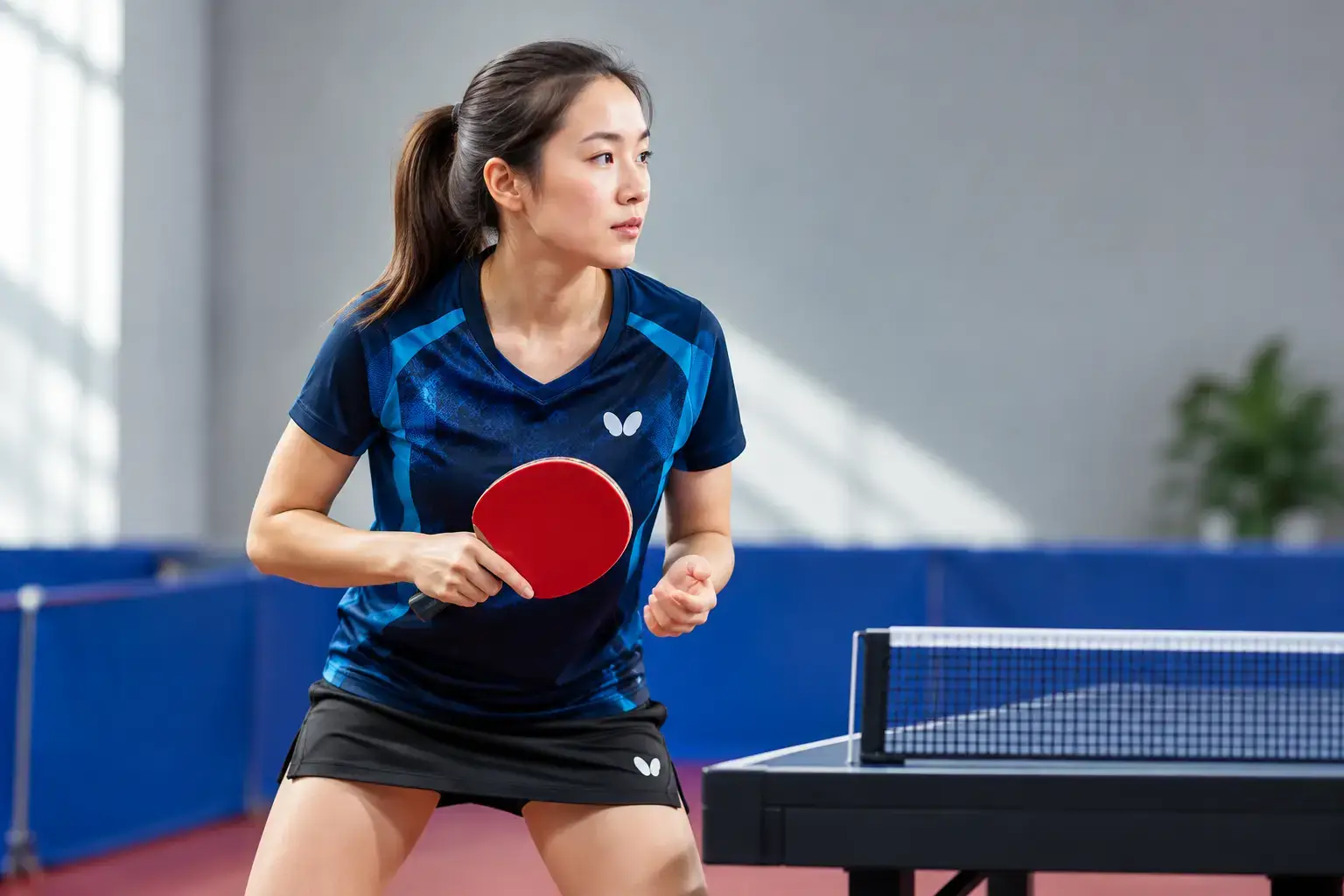
What are the key table tennis apparel competition rules? Competition clothing rules require your shirt to contrast clearly with the ball, while your full kit must consist of a short-sleeved shirt, shorts or skirt, socks, and indoor court shoes. Extra layers or non-standard garments need referee approval, and individual event regulations can set stricter rules for sponsor logos, team uniforms, and player numbers.
What counts as legal table tennis apparel? The standard competition kit consists of a short-sleeved shirt, shorts or a skirt, socks, and playing shoes under ITTF-style regulations. Compression layers, tracksuit tops, caps, or jewelry are generally restricted unless the referee grants specific permission for medical or environmental reasons.
A shirt built for table tennis is the sensible starting point. It should allow full shoulder rotation on the forehand loop, stay clear of the playing hand during serve, and manage sweat through long five- or seven-game matches. Cotton can be comfortable for practice, but it becomes heavier when wet and dries slowly. Performance polyester and polyester-elastane fabrics are usually the stronger competition choice, such as the JOOLA Competition 25 Navy Shirt.
Shorts or skirts should permit a low receiving stance without pulling across the hips. Avoid loose pockets, dangling drawcords, or oversized garments that can distract you or interfere with ball storage. Many serious players use two balls in a pocket during warm-up, but remove anything that rattles, bulges, or affects movement before match play.
Your playing shirt must be clearly different in color from the ball. If the event uses white balls, do not rely on a white, cream, silver, pale gray, or lightly patterned top. If orange balls are in use, avoid orange, coral, or red-orange shades. A small accent color is rarely the issue; the risk comes when the main visible area of the shirt blends into the ball during a fast rally.
The rule exists for a performance reason. At 70 mph or more on advanced attacking exchanges, an opponent needs clean visual pickup from racket contact through the bounce. A shirt that disguises the ball can create an unfair visual advantage, even if that was never your intention.
Ask the organizer about the official ball color before packing. If the information is unavailable, bring one dark shirt and one saturated-color shirt. Navy, royal blue, black, dark green, and strong purple are commonly versatile options for white-ball events, but the referee's decision still applies.
What specifications should you look for when buying competition apparel? Competition apparel should feature lightweight moisture-wicking polyester (120–160 g/m²), flexible shorts or skirts with an inseam of 5–8 in. (13–20 cm), and dedicated indoor court shoes. Look for clean design contrast, secure waistbands, and non-marking outsoles built specifically for lateral court movement.
Fabric weight is a useful buying number. Around 120-140 g/m² generally feels lighter and cooler for hot halls or aggressive movers. Around 145-160 g/m² can feel more substantial, resist cling, and suit players who prefer a structured shirt. Neither number makes a shirt legal by itself. Color contrast and the event's uniform rules matter more.
For shoes, avoid running shoes if you compete regularly. Their higher, softer platforms are designed for straight-line running, not repeated side-to-side recovery steps. Dedicated indoor footwear should provide a grippy non-marking outsole, stable heel hold, and enough forefoot flexibility to load quickly; read our Mizuno Medal Review for Serious Table Tennis for a breakdown of dedicated court shoe performance.
How do logo and team shirt rules work in competitions? Event rules strictly control the size, location, and total surface area of commercial logos, manufacturer branding, and player names. In team matches or leagues, all players on a squad may be required to wear identical club tops with readable numbers secured flat to the back.
Do not cover an approved logo with tape unless an official instructs you to do so. Tape can peel, alter the garment's appearance, and create a new issue. If a player number is required, secure it flat and make sure it is readable from a distance. Bring safety pins or the approved attachment method specified by the organizer.
For junior events, coaches should check the entry information before travel. A coordinated team shirt can be excellent for identity and professionalism, but every player's top still needs to work with the ball color selected for that competition.
How should you inspect your apparel before a match? Perform a fast three-point check: hold your shirt against the official ball under arena lighting to verify contrast, check shoe soles for clean lateral grip, and confirm your uniform matches specific league or event sponsor requirements.
Before warm-up, check three things: ball contrast, shoe condition, and uniform requirements. Hold your shirt against the official ball under the hall lighting, not just in daylight at home. Bright LED lights can make pale colors look closer to white than expected.
Then inspect the soles of your shoes. Dirt, grit, or a worn smooth patch can reduce grip during lateral movement and may concern venue staff. Finally, look at the match board or ask an official whether player numbers, team shirts, or sponsor restrictions apply.
Pack two shirts, one pair of competition shorts or skirt, dry socks, court shoes, and a warm-up layer. That compact backup system covers sweat, a spilled drink, a color conflict, and a delayed laundry cycle without forcing a rushed gear decision.
Usually not when white balls are being used. The main visible color of your shirt must clearly contrast with the ball. A referee may also reject pale gray, cream, or heavily white-patterned shirts if they make the ball harder to see.
It depends on the event and the referee. Standard playing clothing does not automatically include leggings or compression tights, so ask in advance if you need them for warmth, comfort, religious dress, or medical support. Do not wait until the call to the table.
Usually, no. The greater concern is a clean, non-marking indoor sole and stable court-specific performance. Some venues may impose their own footwear rules, particularly where floors are shared with other sports.
Do not assume so. Standard competition apparel is normally a short-sleeved shirt. Sleeveless tops may be accepted in some local events, but they can also be refused under stricter competition rules.
Change immediately into a backup top that contrasts strongly with the ball and has no questionable logos or markings. Arguing the shade rarely helps. A spare legal shirt protects your focus and gets you back to the table faster.
Treat apparel as part of your match equipment, not an afterthought. The right shirt, stable shoes, and a ready backup kit let your opponent worry about the rally while you focus on serve quality, third-ball pressure, and the next point when gearing up at TTmode.com.